
The Off-Peak 5-Day Daraga and Legazpi Itinerary: Mayon Volcano Without the Crowds
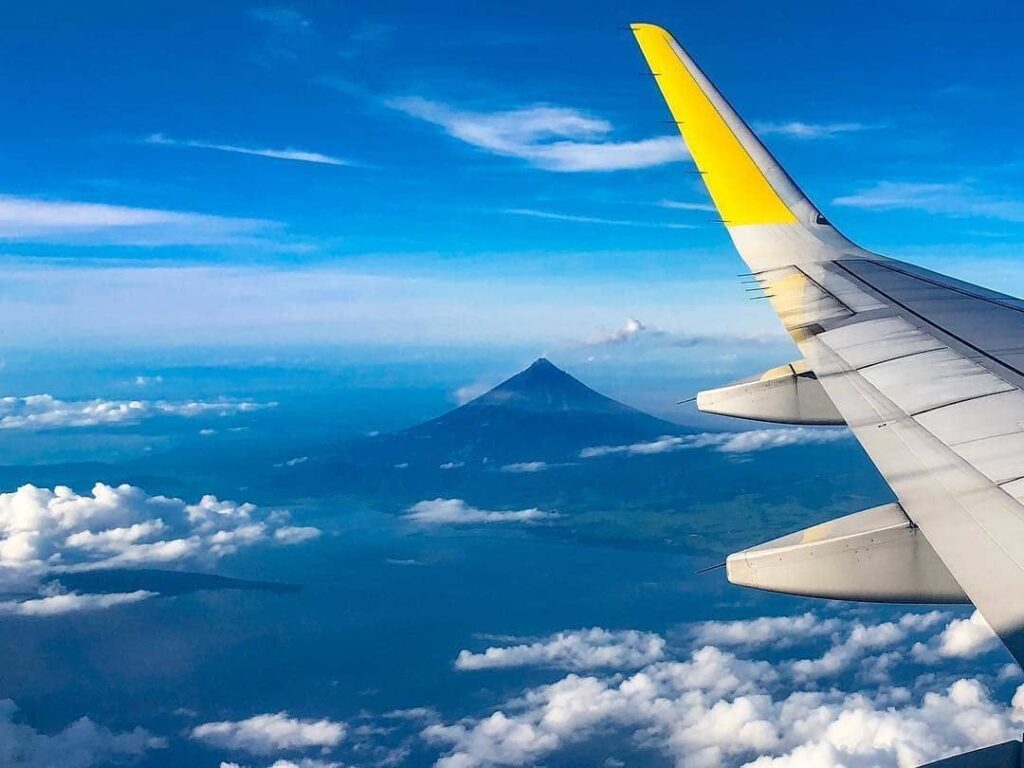
TIP: The best off-peak window for a 5-day Daraga and Legazpi trip is roughly June to November, when the crowds thin out, hotel and tour rates drop, and Mayon Volcano still shows off its cone between rain showers. This itinerary covers Cagsawa Ruins, Daraga Church, Ligñon Hill, Sumlang Lake, and enough sili ice cream to test your spice tolerance, with realistic budget numbers, rain-day backups, and the local know-how you won’t find on a rushed day tour.
Why travel to Daraga and Legazpi off-peak in the first place?
Here’s the thing nobody tells you when you Google “best time to visit Mayon Volcano”: the postcard-perfect cone shot doesn’t actually require peak season. It requires an early alarm and a bit of luck with the clouds, which you can get any month of the year.
What off-peak season does guarantee is elbow room. Fewer buses parked outside Cagsawa Ruins. Shorter lines for the ATV trail. Hotel rates that don’t make you wince. Bicol’s low season for tourism generally runs from around June through November, this is also the region’s rainier stretch, so you trade a slightly higher chance of an afternoon downpour for a quieter, cheaper, more personal trip. If you’re chasing that specific mix of “fewer people, better prices,” this is your season.
A practical note: this window overlaps with typhoon season in the Philippines, so before you book, check the latest PAGASA weather outlook and keep your dates flexible. Nothing about a volcano region is worth gambling on a storm.
Trip snapshot
- Where: Daraga and Legazpi City, Albay, Bicol Region, Philippines
- Duration: 5 days, 4 nights
- Best off-peak months: June–November (shoulder-season sweet spots are typically September and November, when rain is less frequent than the July–August peak of the wet season)
- Getting there: Fly into Bicol International Airport (Daraga), most Manila flights land here now, a short tricycle or Grab ride from both Daraga and Legazpi proper
- Budget style: This itinerary is written for a mid-range independent traveler, but every stop includes a low-cost, DIY-commute version too
Day 1: Land, settle in, and meet the volcano at Ligñon Hill
Ease into the trip. After you land, check into a hotel or homestay with a Mayon view, Legazpi’s Port District has the widest range of budget-to-mid-range options, but Daraga’s outskirts give you a quieter, greener base closer to the ruins. Choose and book an accomodation in and around Daraga at www.viajekita.com/accomodation.
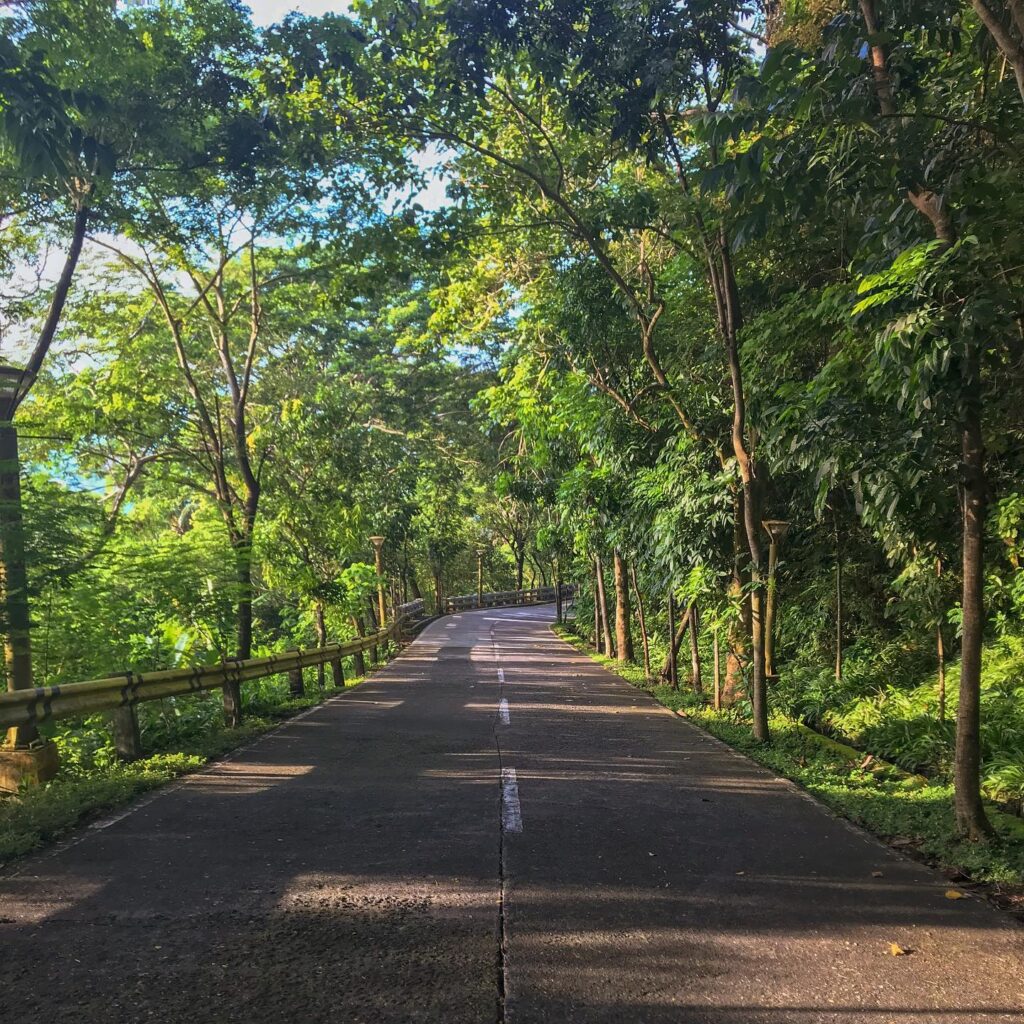
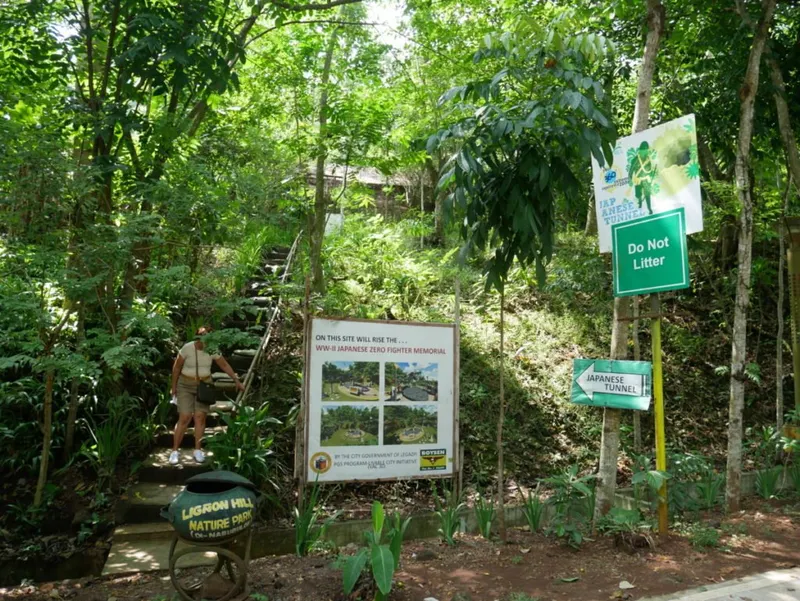
In the late afternoon, head to Ligñon Hill Nature Park, a cinder cone rising about 156 meters (512 feet) over the city. It’s one of the few spots that gives you Mayon Volcano on one side and the Albay Gulf and city skyline on the other, which makes it the best introduction to the whole region in a single vantage point. A tricycle from the city center runs roughly ₱50–100. The park charges a small environmental fee, and note that the site has been under provincial redevelopment, so some older amenities like the zip line may be limited, treat it as a scenic hike-and-viewpoint stop rather than a full adventure park for now.
Off-peak tip: Go up in the late afternoon, not midday. The heat is more forgiving, the light is better for photos, and you’ll likely have the summit closer to yourself.
Dinner: Try Bicol Express or laing at a local carinderia. Both dishes are built on chili and coconut milk, which sums up Bicolano cooking pretty well, comforting, then suddenly not.


Day 2: Cagsawa Ruins and the story behind the bell tower
This is the day people fly to Bicol for, so let’s do it right.
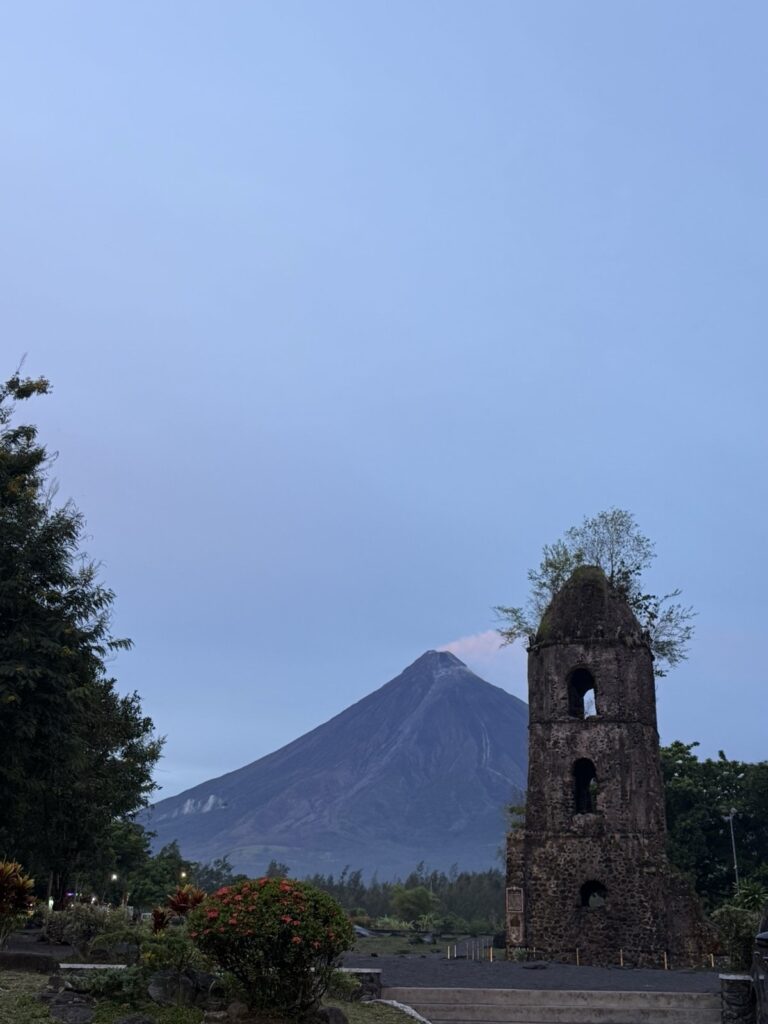
Cagsawa Ruins is what remains of the Franciscan Church of St. James the Apostle, largely destroyed in the catastrophic 1814 eruption of Mayon that buried the surrounding town. Today, only the belfry and fragments of the original church, convent, and outbuildings still stand in a wide, open park with Mayon looming directly behind it, arguably the single most photographed backdrop in the Philippines.
Go early, ideally before 8 AM. Off-peak or not, Cagsawa still gets crowded by late morning, and the early light gives you the clearest shot at an unclouded volcano. Entrance runs about ₱100 for adults, with discounted rates for seniors, PWDs, and students, plus a small parking fee if you’re driving in. You may purchase your Cagsawa ticket at www.viajekita.com/cagsawaticket.
Budget an hour or two to actually walk the grounds, most visitors treat it as a 15-minute photo stop and miss the quieter historical detail. If you want more than the postcard version, look for the interpretive markers around the site tracing the church’s layout, or hire one of the local guides stationed near the entrance.
While you’re there:
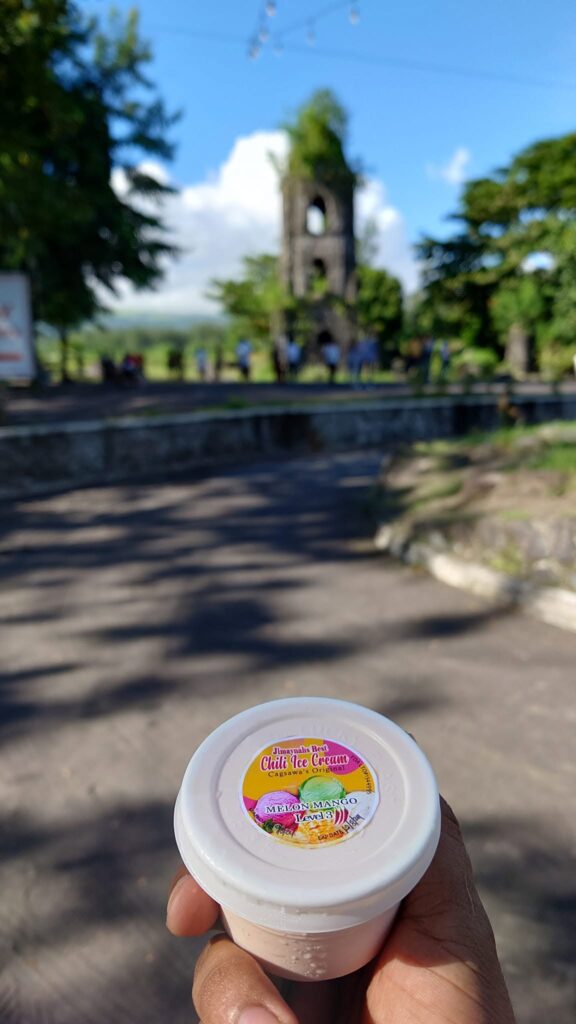
- Try the sili (chili) ice cream from the stalls near the entrance. It’s a genuine Albay specialty and gets progressively spicier by “level”, order the mild one first, trust us.
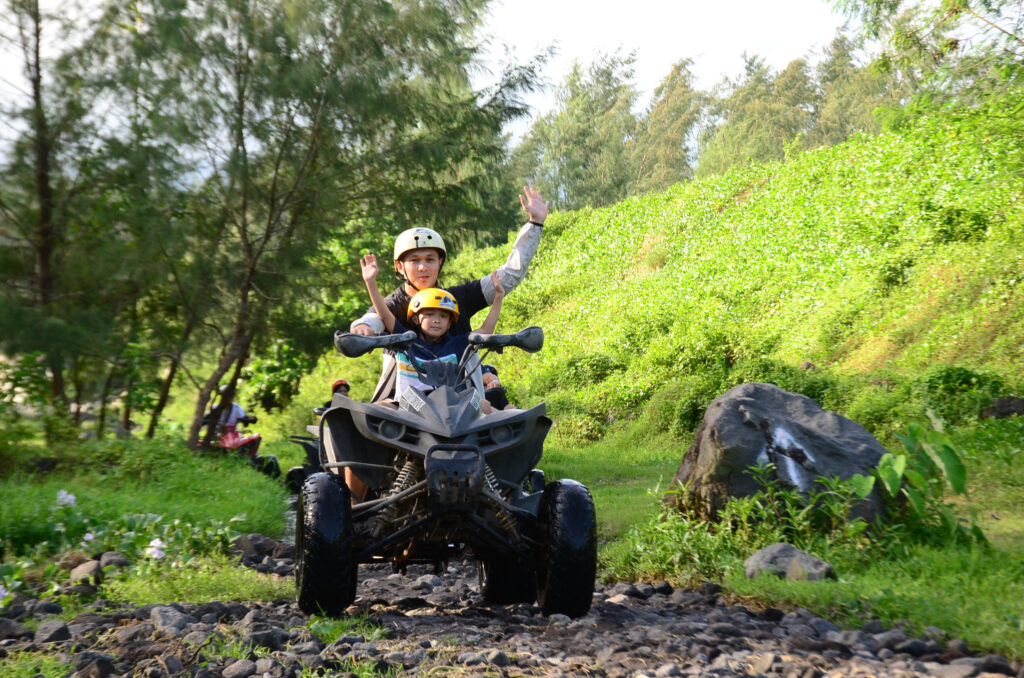
- If you’re up for an adrenaline detour, ATV rentals along the old lava trail are offered right at the site; agree on the price and route before you climb on.
In the afternoon, visit Daraga Church (Our Lady of the Gate), a baroque-style church built from volcanic stone in the 1700s, perched on a hill with its own sweeping view of Mayon and the Cagsawa plain below. It’s a ten-minute ride from the ruins and takes maybe 30–45 minutes to explore properly.
Day 3: Sumlang Lake, Quituinan Ranch, and the slow side of Camalig
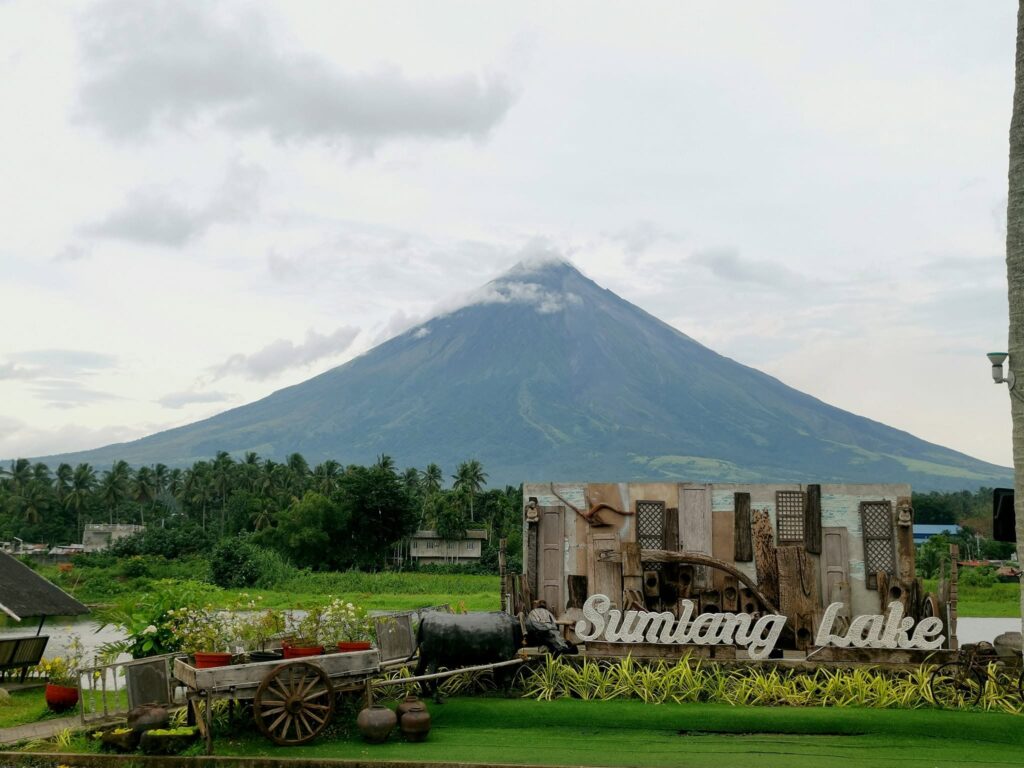
Time to trade ruins for water. Sumlang Lake in Camalig offers yet another angle on Mayon, this time reflected in calm lake water, with bamboo rafts gliding across it. Entrance is a token fee, and a floating cottage rental is inexpensive if you’re traveling with a small group. Bamboo raft rides and kayak rentals are both available on-site for a modest per-person rate.
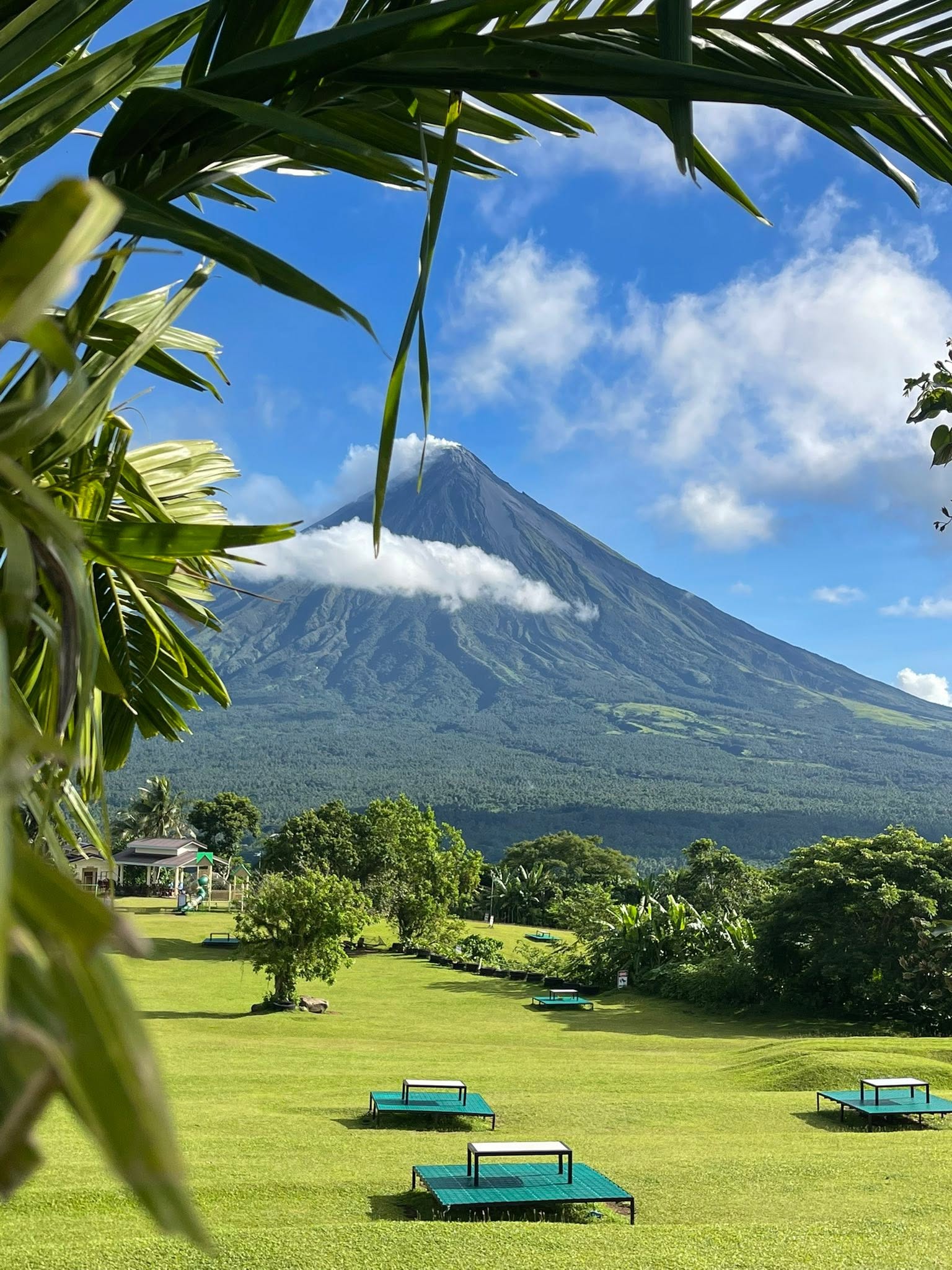
From there, it’s a short hop to Quituinan Ranch, a laid-back countryside spot popular for its rolling hills, farm views, and, yes, more Mayon photo ops, minus the crowds of Cagsawa.
Off-peak advantage: Both spots are naturally quieter than Legazpi’s headline attractions, so even in peak season they’re calmer. In off-peak months, expect near-solo access on a weekday.
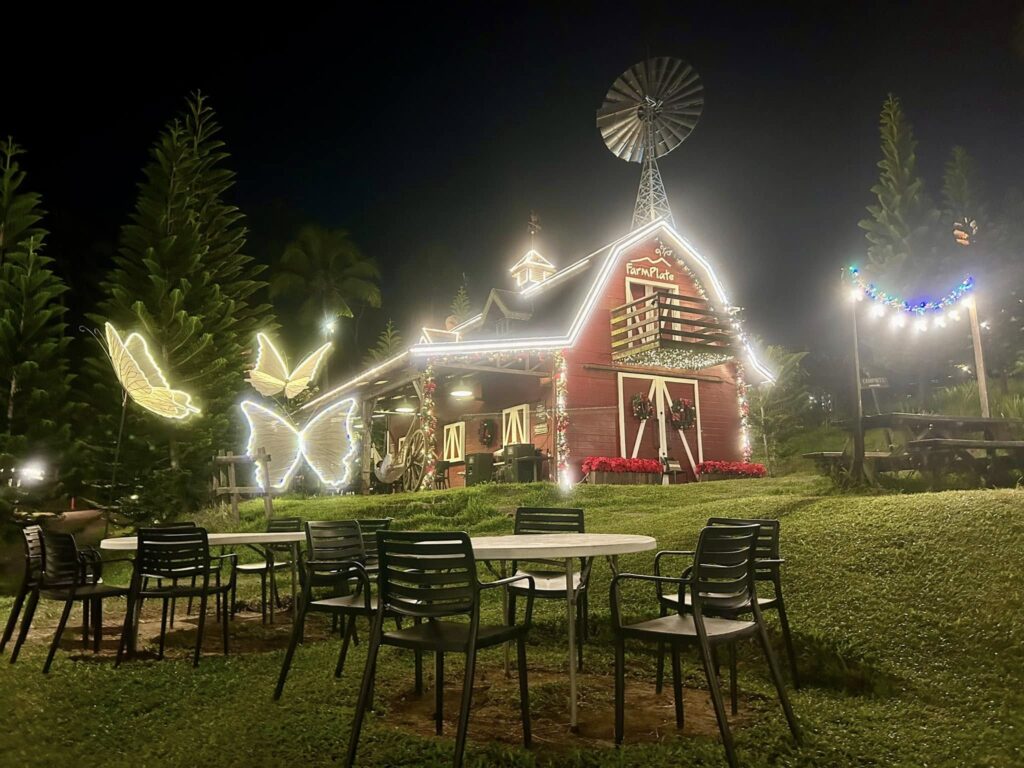
Round out the day with a visit to nearby FarmPlate in Gabawan, an agritourism stop with local produce, food stalls, and a relaxed farm setting, a good low-key finish before heading back into town.
Day 4: Legazpi City Proper — boulevard, history, and Bicol food crawl
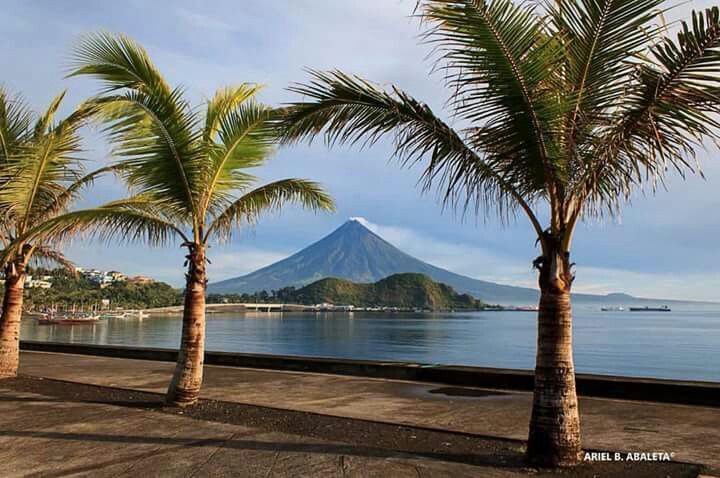
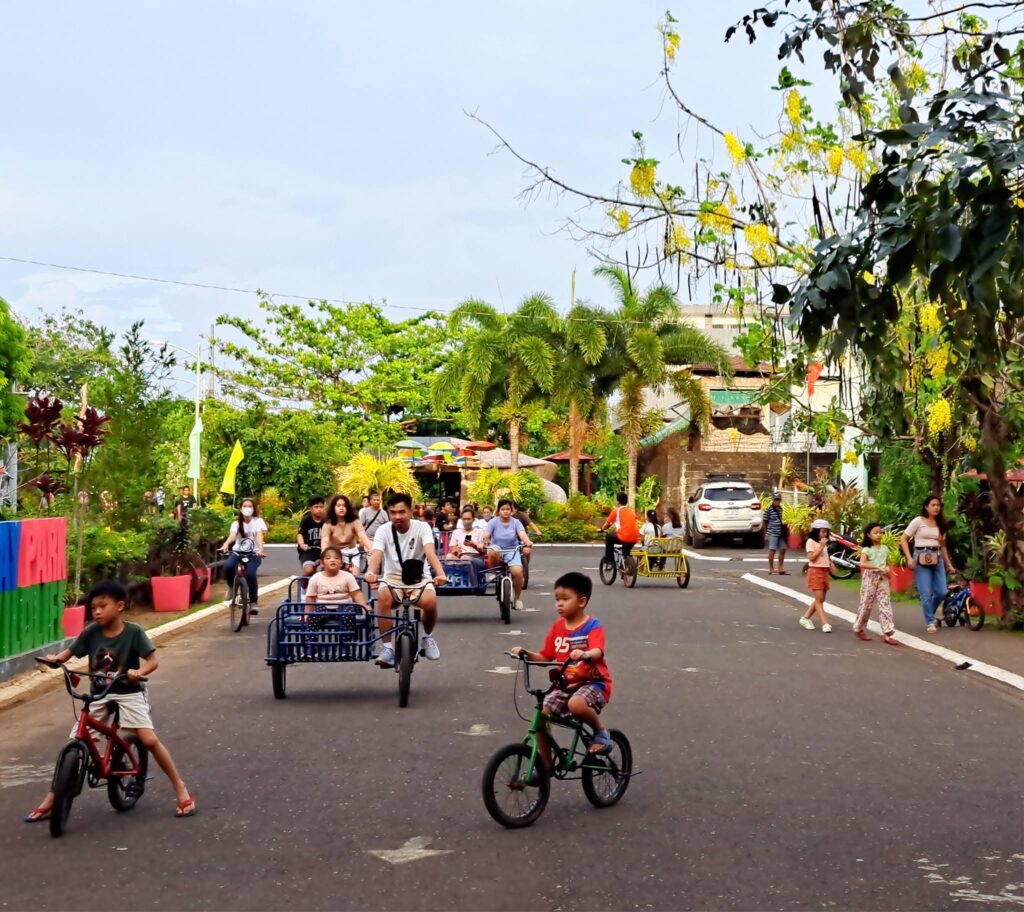
Spend today in the city itself. Start at Legazpi Boulevard, a coastal walkway along Albay Gulf that’s especially pleasant in the early morning or at sunset, with Mayon visible across the water on clear days.
From there, explore Albay Park and Wildlife, a compact zoological and botanical park good for a couple of relaxed hours, and if you’re interested in wartime history, ask locally about the WWII-era Japanese tunnels in the area, a lesser-known layer of Albay’s history that most first-time visitors skip entirely.
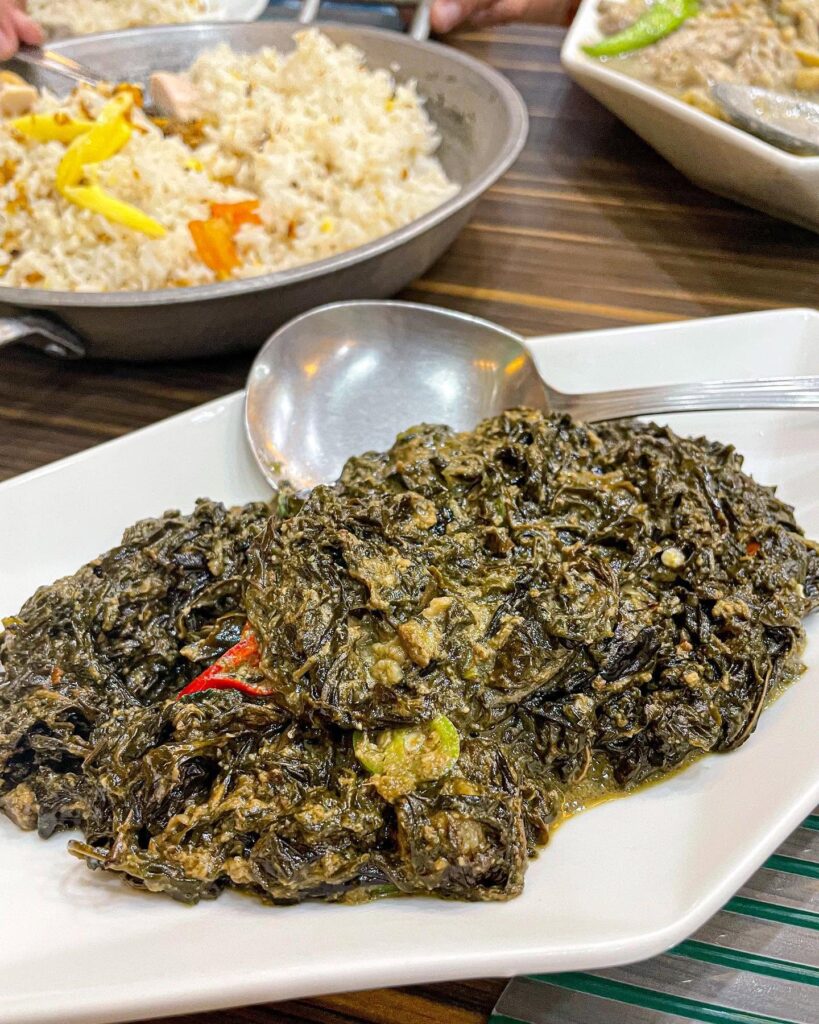
Spend the afternoon eating your way through Legazpi. Bicolano cuisine is one of the most distinct regional cuisines in the Philippines, built on chili and coconut milk in dishes like Bicol Express, laing, and pinangat (also called natong in some areas). Ask your homestay host or hotel staff for their favorite neighborhood carinderia, he best versions of these dishes are rarely the ones on hotel menus.
Rain-day backup: If an off-peak downpour rolls in, this is your most flexible day, malls, museums, and coffee shops in Legazpi proper give you plenty of indoor options without derailing the itinerary.
Day 5: Slow morning, souvenirs, and departure
Keep the last day light. Revisit whichever spot you liked most for a second look at Mayon, clouds shift throughout a trip, and a second attempt at that ruins-and-volcano photo is rarely wasted.
Before heading to the airport, stock up on local pasalubong (souvenirs): pili nut candy is Albay’s signature treat, and you’ll find it at stalls near Cagsawa Ruins, in Legazpi’s public market, or at souvenir shops around Albay.
Practical off-peak planning notes
- Weather: June–November is Bicol’s rainier stretch and overlaps with typhoon season. Build a rain-day buffer into your itinerary (Day 4 above is designed for this) and monitor PAGASA advisories as your trip approaches.
- Mayon visibility: The volcano’s near-perfect cone is more reliably visible during the drier months (roughly February–May), so off-peak travelers should treat a fully clear Mayon shot as a bonus, not a guarantee, mornings are still your best bet.
- Budget: Off-peak accommodation and tour pricing in Legazpi and Daraga run noticeably lower than the February–May peak, and popular attractions are far less crowded on weekdays.
- Getting around: Tricycles and jeepneys connect Daraga and Legazpi easily; for a tighter 5-day schedule, a private day tour or rented vehicle for the Cagsawa–Sumlang–Quituinan loop saves significant time.
- Currency: All entrance fees above are in Philippine pesos (₱) and are approximate, small increases are common, so treat them as planning estimates rather than fixed prices.
FAQ’s
Is Legazpi worth visiting during the rainy season? Yes, with flexibility. You’ll get lower prices and smaller crowds at every attraction, and mornings often stay clear even in the wetter months. Just build a backup day into your itinerary and track weather advisories close to your travel dates.
How many days do you need in Daraga and Legazpi? Five days comfortably covers the region’s core sites, Cagsawa Ruins, Daraga Church, Ligñon Hill, Sumlang Lake, Quituinan Ranch, and Legazpi City proper, without feeling rushed, plus a buffer day for weather or a repeat photo stop.
What is the off-peak season in Legazpi? Roughly June through November, coinciding with Bicol’s rainy season. Peak season runs from around February to May, when the weather is driest and Mayon Volcano’s cone is most reliably visible.
Do you need a tour guide for this itinerary? Not strictly, tricycles, jeepneys, and ride apps make most stops accessible independently. A private day tour is worth it mainly if you want to cover Cagsawa, Sumlang Lake, and Quituinan Ranch in a single efficient day, or if you’re traveling with a larger group.