
Complete Legazpi City Travel Guide: Everything You Need to Know (2026)
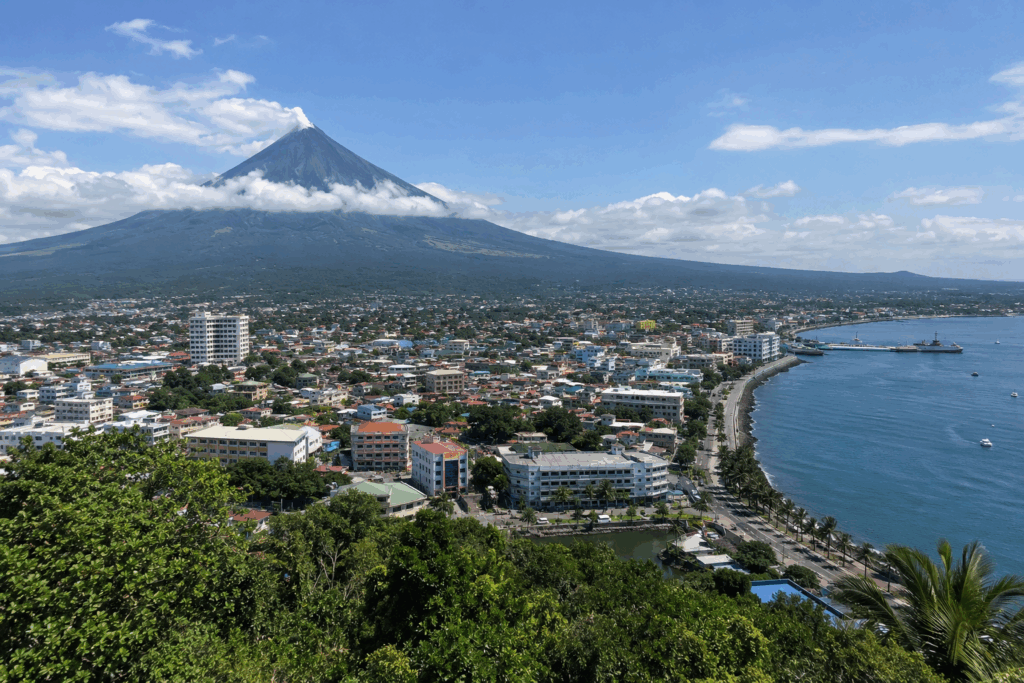
Imagine waking up in Legazpi City, pulling back the curtains, and finding Mayon Volcano filling your entire window, its near-perfect cone rising 2,462 meters above the valley floor, sharp and unhurried against a clear Bicol morning sky. That view is not a brochure promise. It is the daily reality of life in Legazpi City, the capital of Albay Province and the urban heartbeat of the Bicol Region. This complete Legazpi City travel guide is for first-time visitors, domestic tourists planning a weekend escape from Manila, and anyone who has ever wondered what it means to have a world-class natural wonder as the permanent backdrop to an entire city.
Legazpi City is one of the Philippines’ most complete urban travel destinations, not because it tries to be everything, but because it genuinely is. You get a proper city with hotels, malls, restaurants, and transport infrastructure. You get Mayon Volcano visible from nearly every street corner. You get the baywalk of Legazpi Boulevard stretching along Albay Gulf. You get Embarcadero’s waterfront dining with the volcano as your dinner view. And you get fast, affordable access to some of the best natural attractions in the Bicol Region, the Cagsawa Ruins, Lignon Hill, Sumlang Lake, and ATV terrain through Mayon’s volcanic foothills. Legazpi City does not make you choose between comfort and adventure. It gives you both.
This guide covers everything you need to plan a confident, well-informed trip to Legazpi City: top attractions, things to do, where to stay, where to eat, how to get here, how to get around, the best time to visit, day trip options, and an honest budget breakdown. Let’s go.
QUICK OVERVIEW: LEGAZPI CITY AND WHY VISIT?
Legazpi City is the provincial capital of Albay and one of the largest cities in the entire Bicol Region, with a population of approximately 200,000. It functions as the economic, commercial, and administrative center of Albay Province, which means it has the infrastructure, accommodation variety, and dining options that make it the natural base for exploring everything Albay has to offer.
What sets Legazpi apart from other Philippine regional capitals is the sheer, almost absurd drama of its setting. Mayon Volcano, one of the most active and most photographed volcanoes in the world, is visible from virtually every point in the city. You see it from the baywalk. You see it from the malls. You see it from your hotel window, from the jeepney, from your table at a waterfront restaurant. The volcano is not a day trip from Legazpi City. It is a constant, living presence in the city’s daily life.
Legazpi City is best for:
- First-time visitors to Bicol who want a comfortable urban base with easy access to major attractions
- Domestic travelers from Manila looking for a weekend or long-weekend escape with real substance
- International tourists who want the full Philippines experience, nature, culture, food, history, without sacrificing urban convenience
- Families with children who need reliable hotels, restaurants, and safe activities
- Adventure travelers using Legazpi as a staging point for ATV rides, volcano hikes, lake experiences, and cave explorations across Albay Province
How Legazpi compares to Daraga:
Legazpi City and Daraga are neighboring destinations, not competing ones. Daraga offers a more local, community-rooted atmosphere, it’s where the Bicol International Airport is, where the Cagsawa Ruins are, and where most ATV operators are based. Legazpi City offers more hotels, a wider restaurant scene, shopping centers, and the baywalk experience. Many travelers choose to base themselves in Legazpi City and make half-day trips into Daraga for the ATV rides, and heritage sites visit. Both are worth your time. For a deep dive into the neighboring municipality, read the Complete Daraga, Albay Travel Guide.
TOP ATTRACTIONS IN LEGAZPI CITY


1. Lignon Hill Nature Park
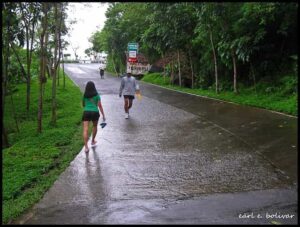
Lignon Hill is the single most important attraction in Legazpi City for anyone who wants to see Mayon Volcano from above. This forested hill sits within the city itself, and the trail to the summit, a 20–30 minute trek through a well-maintained path, rewards you with one of the most panoramic Mayon views available anywhere in Albay. From the hilltop, you see the perfect cone rising across a spread of green lowlands, Albay Gulf glittering to one side, and the urban sprawl of Legazpi below you. It is the kind of view that makes you understand, immediately, why people talk about Mayon the way they do.
Lignon Hill also has a zipline for those who want to add an adrenaline moment to the experience, and several lookout decks at various elevations for photography.
- Entrance fee: Verify current entry fee before visiting (fees for Nature Parks can change seasonally)
- Zipline: Available on-site; verify current rates and operating hours at the park
- Best time: Arrive at or before sunrise for the clearest Mayon views and cooler temperatures; cloud cover typically builds by mid-morning
- Photography tip: The summit lookout faces Mayon directly, bring a wide-angle lens if you have one; the volcano fills the frame
- How to get there: Tricycle from Legazpi City center (roughly ₱40–₱80); Grab also available
2. Legazpi Boulevard
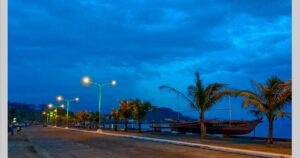
Legazpi Boulevard is the city’s long baywalk stretching along Albay Gulf, a wide, well-paved promenade lined with benches, food stalls, and open views across the water toward Mayon. It is where Legazpi residents go for their morning walks, their evening tambay (hangouts), and weekend family outings. For visitors, it is simply a beautiful, unhurried way to experience the city at a human pace.
The boulevard is best in the early morning and at sunset. In the morning, Mayon is typically clearest and the light is soft. At sunset, the sky behind the volcano turns shades of orange and pink that no camera filter can improve upon. There are food vendors along the boulevard selling local snacks, take the opportunity to try whatever looks freshest.
- Best time: Sunrise (5:30–7:00 AM) for Mayon views; sunset (5:30–6:30 PM) for atmosphere
- Practical tip: The boulevard can get crowded on weekend evenings, weekday mornings are peaceful and uncrowded
- Nearby: Embarcadero de Legazpi is at one end of the boulevard area
3. Embarcadero de Legazpi
Embarcadero de Legazpi is a waterfront lifestyle complex along Legazpi Bay, the kind of place where you go for dinner and stay for three hours because the view and the company make leaving feel unnecessary. The complex houses multiple restaurants, a small shopping area, outdoor seating zones, and entertainment options, all arranged along the waterfront with Mayon Volcano as the permanent backdrop.
For a meal with a Mayon view at sunset, Embarcadero is the best address in the city. Restaurants range from casual Filipino sit-down spots to slightly more elevated options with waterfront seating. The ambiance in the evening, when Mayon is lit from one side and the bay reflects the last light, is genuinely striking.
- Entrance fee: Free (individual restaurants charge separately)
- Best time: Late afternoon through evening (4:00 PM onwards) for the best dining atmosphere and Mayon views
- Practical tip: Tables with direct Mayon views fill up fast on weekends, arrive early or make a reservation where possible
- What to expect: Varied dining options, open-air seating, some retail and entertainment
4. Cagsawa Ruins (Daraga — 15–20 Minutes Away)
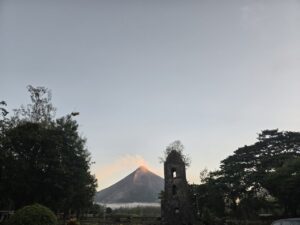
The Cagsawa Ruins are technically located in the neighboring municipality of Daraga, approximately 15–20 minutes from Legazpi City center by tricycle or private vehicle, but no Legazpi itinerary is complete without them. The ruins of the 16th-century Franciscan church, buried by Mayon’s catastrophic 1814 eruption, stand in an open field with the volcano rising perfectly behind the surviving bell tower. It is one of the most iconic images in the entire Philippines.
The site has a small entrance fee, souvenir stalls, food vendors, and ATV operators offering rides through the surrounding volcanic terrain. For most visitors, the Cagsawa Ruins are the single most memorable visual experience of a Bicol trip.
- Entrance fee: ₱100 (adults), ₱50 (children)
- Hours: 5:00 AM – 7:00 PM daily
- Best time: Early morning (6:00–8:00 AM) for clear Mayon views and soft light; late afternoon (4:30–6:00 PM) for golden-hour photography
- How to get there from Legazpi City: Tricycle (₱80–₱150 one way) or Grab; jeepney to Daraga also available (~₱15–₱20)
For the full history and practical details, read the Cagsawa Ruins: History, Heritage, and Story Guide.
5. Sumlang Lake (Camalig- 30 Minutes Away)
Sumlang Lake sits in the municipality of Camalig, about 30 minutes from Legazpi City, but it is deeply associated with the Legazpi tourism experience and appears on virtually every Albay itinerary. The lake is calm, tree-lined, and framed by rolling hills, with Mayon Volcano rising unmistakably in the background when the weather is clear.
The distinctive activity here is the bamboo raft (balsa) floating dining experience, simple bamboo platforms pushed gently across the lake while you eat local food and look out at Mayon. It is quiet, unhurried, and very Filipino in the best sense. If you are visiting Albay and you pass up Sumlang Lake, you will regret it.
- Entrance fee: Verify current entry fee before visiting; raft rental fees apply separately
- Best time: Morning for the clearest Mayon views; avoid peak afternoon when cloud cover builds
- Practical tip: Bring insect repellent; the lakeshore can be buggy in the early morning
- How to get there: Hire a tricycle from Legazpi City (verify current rates) or rent a vehicle via vehicle.viajekita.com for flexibility
6. Kapuntukan Hill
Kapuntukan Hill is sometimes called Lignon Hill 2, a smaller, less developed viewpoint that offers an alternative Mayon panorama for travelers who want to avoid the crowds that gather at Lignon Hill, especially during peak season. The trek is slightly more demanding than Lignon Hill’s paved path, which means the atmosphere at the summit is quieter and more raw.
- Entrance fee: Verify current entry fee before visiting
- Best time: Early morning for clearest Mayon views
- Best for: Repeat visitors, photographers who have already done Lignon Hill, travelers who prefer off-the-beaten-path options
THINGS TO DO IN LEGAZPI CITY
Trek Lignon Hill for the Best Mayon Sunrise View
Set your alarm for 5:00 AM. Take a tricycle to Lignon Hill Nature Park. Start the trail as the sky begins to lighten. By the time you reach the summit, Mayon Volcano will be emerging from the dark in slow, dramatic detail, and you will understand why people describe Albay as one of the Philippines’ most beautiful provinces. This is the single best activity in Legazpi City for anyone visiting for the first time.
Book an ATV Ride to the Cagsawa Ruins
ATV rides through Mayon’s volcanic terrain, departing from or near the Cagsawa Ruins in Daraga, are one of the most popular activities for visitors to the entire Legazpi-Daraga area. You navigate ash-gray trails, open fields, and the dramatic landscape shaped by centuries of volcanic activity, with Mayon as your constant backdrop. Rides are beginner-friendly and guides provide safety gear and instruction.
Book ATV rides in advance through Viaje at atv.viajekita.com. For everything you need to know about the ATV experience, read the ATV Rides Near Mayon Volcano Guide.
Have Dinner at Embarcadero with a Mayon View
Make a reservation or arrive early at Embarcadero de Legazpi for sunset dinner. Order Bicol Express, laing, or grilled fish. Watch the light change on Mayon’s cone as the sky moves from blue to orange to pink. This is what the Legazpi travel experience is at its most complete.
Take a Bamboo Raft at Sumlang Lake
Hire a balsa (bamboo raft) at Sumlang Lake and spend an hour floating quietly on the water with Mayon in the background. Bring your own food or order from vendors at the lake. It is unhurried, affordable, and uniquely Bicol.
Walk Legazpi Boulevard at Sunset
The baywalk at Legazpi Boulevard is one of the Philippines’ finest urban promenades. An evening walk along the boulevard, stopping for street food and watching the sun drop behind the hills, costs nothing and requires no planning. It is simply one of those travel experiences that stays with you.
Sample Bicolano Street Food
Wake up early, head to Legazpi City, and eat breakfast among locals. Try goto or arroz caldo (congee), pick up fresh pili nuts, and let the controlled chaos of the wet market sharpen your appetite for the day. This is travel at its most honest.
Day Trip to Daraga Church and Cagsawa Ruins
The Daraga Church (Nuestra Señora de la Portería), built in 1773 from volcanic rock, perches on a hilltop with commanding Mayon views. Pair it with a visit to the Cagsawa Ruins and an ATV ride, this is the classic Albay half-day itinerary and it delivers every time. Read the Complete Daraga, Albay Travel Guide for complete details on planning this day trip.
Explore Local Pasalubong Shops
Beyond the public market, Legazpi City has dedicated pasalubong shops selling Albay’s most prized local products: pili nut confections, bottled laing, chili vinegar, pili-based pastries and chocolates, and dried fish. These make excellent gifts and are genuinely representative of Bicolano food culture. Look for shops along the main commercial streets near the city center and inside Pacific Mall Legazpi.
WHERE TO STAY IN LEGAZPI CITY
Legazpi City has the widest range of accommodation options in Albay Province, a clear advantage over most other destinations in the region. The accommodation landscape generally breaks down into three zones and three budget tiers.
Downtown / City Center:
This area puts you close to the public market, commercial streets, transport hubs, and government offices. It is convenient for travelers who are primarily using Legazpi as a transport and logistics base. Business travelers tend to prefer this area. A mix of mid-range hotels and budget guesthouses cluster here.
Near Embarcadero / Bayside:
The waterfront area near Embarcadero de Legazpi and along Legazpi Boulevard is the most tourism-oriented zone for accommodation. Staying here puts you within walking distance of the baywalk, Embarcadero’s restaurants, and the waterfront views of Mayon. This is the most pleasant area to be based for leisure travelers.
Budget Guesthouses:
Legazpi City has a solid supply of budget guesthouses and hostels catering to backpackers and solo travelers. These are typically found in the city center and offer clean, basic rooms at rates well below the mid-range hotels.
A note on Daraga as an alternative base: Many travelers, especially those whose primary goals are the Cagsawa Ruins, Daraga Church, and ATV rides, choose to base themselves in Daraga rather than Legazpi City. Daraga puts you closer to those specific attractions and gives you a more local, neighborhood feel. The Bicol International Airport is also in Daraga, making check-in and check-out simpler. Legazpi City and Daraga are only 5–8 km apart, so neither choice locks you out of the other’s attractions.
Browse current accommodation listings for the Legazpi-Daraga area at viajekita.com/accoms.
WHERE TO EAT IN LEGAZPI CITY
Bicolano cuisine is among the most distinctive regional food traditions in the Philippines, defined by the confident use of sili (chili pepper) and coconut milk in combinations that hit your palate in ways you do not expect and do not forget.
Dishes you must try in Legazpi City:


- Bicol Express– Pork strips with coconut milk, shrimp paste (bagoong), and generous quantities of long green chili. The most famous Bicol dish, originally associated with a train route, now beloved across the Philippines. Every local restaurant serves its own version.
- Laing– Dried taro leaves simmered in coconut milk with chili and sometimes pork or shrimp. Deeply savory, rich, and filling. Often eaten with steamed rice.
- Pinangat– Taro leaves and fish or pork wrapped in taro leaves and steamed in coconut milk with chili. Originating from Camalig, this dish is one of the region’s most distinctive preparations.
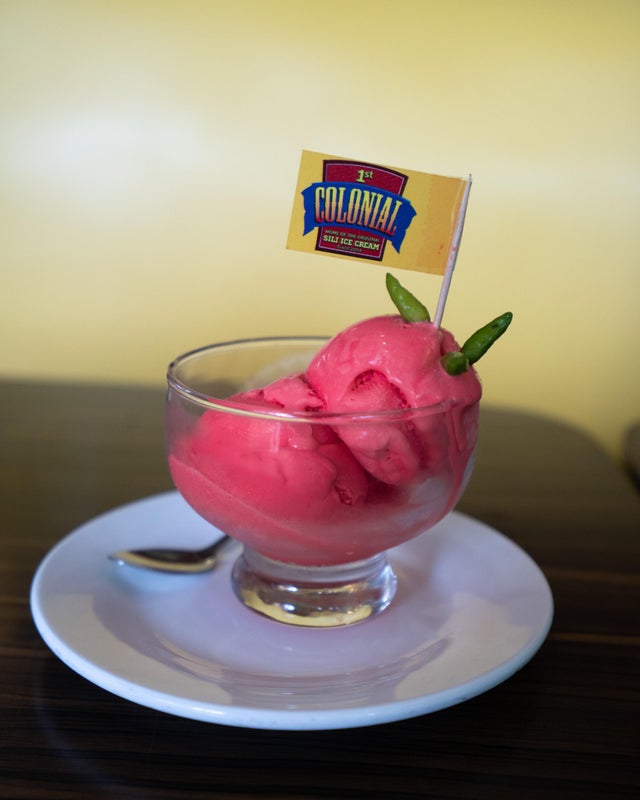
- Sili ice cream– Yes, chili-flavored ice cream. It sounds improbable. It is genuinely good, a sweet-spicy combination that captures the playful irreverence of Bicolano food culture. Find it at local ice cream shops and some restaurants.
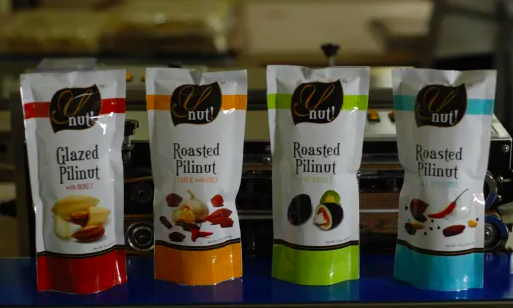
- Pili-based sweets– Pili nuts are native to Bicol and are used in chocolates, brittles, pastries, and other confections. They taste like a richer, creamier version of a macadamia nut. Buy them at pasalubong shops throughout the city.
Where to eat:
The Embarcadero de Legazpi restaurant strip is the most convenient and atmosphere-rich dining area in the city- varied options, waterfront setting, and Mayon views. Good for groups, dates, and any meal where you want the setting to do some of the work.
For authentic, inexpensive Bicolano food, seek out the local “karinderia” (small eateries) scattered throughout the city center. These serve home-cooked meals in the ₱60–₱150 per dish range and are where Legazpi residents eat daily. The food is often the most honest representation of what Bicolano cooking actually tastes like, not adjusted for outside palates.
Local and international fast food chains (Jollibee, McDonald’s, KFC and others) are present in the city for travelers who need a familiar meal.
HOW TO GET TO LEGAZPI CITY
By Air
Flying is the fastest and most comfortable way to get to Legazpi City from Manila. Flights land at Bicol International Airport (BIA), which is technically located in the municipality of Daraga, approximately 10 minutes by road from Legazpi City center.
Airlines serving BIA from Manila:
- Philippine Airlines (PAL): Daily flights; approximately 45–60 minutes
- Cebu Pacific: Daily flights; approximately 45–60 minutes
- AirAsia: Check current schedule; frequency varies
Flights from Manila to Legazpi are generally affordable and significantly faster than the bus alternative. Book early for the best fares, especially during peak season (March–May) and holiday periods.
For complete guidance on getting from BIA to Legazpi City and Daraga, including transport options, fares, and timing, read Getting From Bicol International Airport to Daraga and Legazpi.
By Bus from Manila
For travelers who prefer the land journey or are traveling on a budget, overnight buses from Manila to Legazpi City are a practical and widely used option.
Bus lines: Cagsawa, Penafrancia, Isarog, DLTB, Raymond Transport
Departure points in Manila: Avenida (Cubao area) and Pasay terminals
Journey time: Approximately 10–12 hours (overnight journey)
Estimated fare: Approximately ₱600–₱1,200 depending on the line, class of seat, and current fuel surcharges. Prices change, verify current fares directly with the bus operator before booking.
Arrival: Most buses arrive at or near the Legazpi Grand Central Terminal or at various points in the city center
Overnight buses typically depart Manila between 7:00 PM and 10:00 PM, arriving in Legazpi in the early morning, timing that works well for travelers who want to start their first day without losing daylight hours.
By Bus from Naga City
If you are traveling from Naga City (the other major Bicol urban center), the journey to Legazpi City takes approximately 2–3 hours by bus or van. Multiple bus lines and vans (V-hire) make this trip throughout the day. This is a common route for travelers doing a broader Bicol trip that includes both Naga and Legazpi.
From Bicol International Airport to Legazpi City
After landing at BIA in Daraga, you have several options for the approximately 10-minute transfer to Legazpi City center:
- Airport taxis: Available at the arrival area; most convenient but verify metered or fixed rates.
- Tricycle: Available outside the airport; approximately ₱150–₱500 to Legazpi City center (negotiate fare before boarding)
- Vehicle rental through Viaje: For the most seamless arrival experience, especially if you have luggage or are traveling as a group, book a vehicle pickup in advance at viajekita.com/scooters. A private vehicle rental means no waiting, no negotiating fares, and door-to-door service from the moment you land.
HOW TO GET AROUND LEGAZPI CITY
Tricycle
The tricycle, a motorcycle with a sidecar, is the primary mode of local transport in Legazpi City. They are everywhere, affordable, and the most practical way to get between attractions within the city.
- Standard fare: Approximately ₱15–₱25 per ride for short distances within the city
- Special hire (chartered tricycle): Approximately ₱150–₱300 per hour if you want a dedicated tricycle for a self-guided tour of several spots
- Tip: For rides to specific attractions, agree on a fare before boarding to avoid misunderstandings
Jeepney
Jeepneys connect Legazpi City to Daraga and other neighboring towns along regular routes. They are the most economical option for inter-town travel.
- Fare: Approximately ₱15–₱20 per ride (Legazpi to Daraga)
- Route tip: Ask locals or the driver to confirm the jeepney stops in your destination; routes vary
Grab
Grab ride-hailing is available in Legazpi City, a significant convenience compared to other Bicol towns where Grab is not yet active. Use Grab when you want a metered, predictable fare, air-conditioning, and the ability to book from your phone. This is particularly useful for late-night rides back from Embarcadero or early-morning trips to Lignon Hill.
Vehicle Rental through Viaje
For maximum flexibility, especially for day trips to Cagsawa Ruins, Sumlang Lake, Camalig, or other attractions outside the Legazpi City center, vehicle rental is the most practical option. A private vehicle means you set your own schedule, manage your own stops, and are not reliant on public transport timetables.
Viaje offers vehicle rental including motorcycle rental, which is an excellent option for solo travelers and couples who want to explore Mayon-area destinations affordably and at their own pace. Browse and book at viajekita.com/scooters.
BEST TIME TO VISIT LEGAZPI CITY
March to May- Peak Season (Recommended for First-Timers)
The dry season offers the most reliably clear Mayon views and the most comfortable conditions for outdoor activities. Days are warm (26–32°C), rain is minimal, and the sky is often blue from morning until late afternoon.
The main considerations during peak season: crowds and prices are both at their highest. Accommodations fill up quickly during Holy Week (March or April, depending on the year), and during the Magayon Festival in May, Albay’s biggest provincial celebration, a month-long event honoring the legendary Daragang Magayon and Mayon Volcano, with street parades, cultural shows, and food fairs. If you can time your visit to coincide with the Magayon Festival, do it. The energy and cultural richness of the event are unlike anything else in Bicol.
Book accommodations at least 2–3 weeks in advance for peak season travel; 4–6 weeks ahead for Holy Week and Magayon Festival dates.
June to November- Rainy and Typhoon Season
This is typhoon season across the Philippines. Legazpi City is in a typhoon-prone area, storms do pass through or affect the region during these months. Mayon Volcano is frequently cloud-covered during the rainy season, sometimes for days at a time. Outdoor activities like ATV rides and Lignon Hill trekking are still possible on clear days between rain events, but you need to plan with flexibility.
Accommodation prices drop significantly during this period, and attractions are uncrowded. Experienced travelers who can adapt to weather unpredictability sometimes prefer the off-peak months for exactly this reason.
December to February — Shoulder/Cool Season
By December, the worst of the typhoon season has passed. Temperatures are cooler (22–28°C), the air is less humid, and Legazpi City has a pleasant, energized feel through the Christmas and New Year season. Mayon is partly cloudy more often than during peak season but clear windows are common, especially in the mornings.
This is a good compromise period, lower prices than peak season, better weather reliability than June–October.
A note on Mayon visibility: Even during the dry season, Mayon is frequently cloud-covered by late morning. The best Mayon views happen in the first hour or two after sunrise, regardless of the time of year. Plan your most important viewpoint visits (Lignon Hill summit, Cagsawa Ruins) for early morning, and do not assume a clear day at 7:00 AM will stay clear at 11:00 AM.
For a full breakdown of seasons, months, and what to expect, read Best Time to Visit Albay: Peak Season vs. Off-Peak Season.
DAY TRIPS FROM LEGAZPI CITY
Legazpi City’s central position in Albay Province makes it an ideal base for exploring destinations across the region. Here are the most worthwhile day trips, in order of proximity:
Daraga (10–15 minutes)
The neighboring municipality of Daraga is the most important day trip from Legazpi City, and for many visitors, the day trip that defines their Albay experience. Cagsawa Ruins, Daraga Church, the Japanese Tunnel, and the ATV operators near the Mayon foothills are all here. The Complete Daraga, Albay Travel Guide covers all of it in detail.
Camalig (30 minutes)
Camalig is home to Hoyop-Hoyopan Cave (a limestone cave with a well-developed interior, regular guided tours, and an underground river in some sections), the Quitinday Green Hills (rolling hills with Mayon views, excellent for photography), and Sumlang Lake, all worthwhile destinations for travelers who want to go beyond the city.
Jovellar (approximately 1 hour)
Jovellar is known for its natural swimming pools and falls, a refreshing option for travelers who want a water-based day trip with a more adventure-oriented character.
Sto. Domingo and the Albay Coast
The coastal towns of Sto. Domingo and nearby municipalities have dark-sand beaches and coastal scenery shaped by Mayon’s volcanic geology. Less crowded than many Philippine beach destinations, and worth exploring for travelers who want a full Albay experience.
For a detailed, day-by-day plan for combining Legazpi City and Daraga, read the 5-Day Daraga and Legazpi Itinerary (Peak Season).
BUDGET GUIDE: HOW MUCH DOES LEGAZPI CITY COST?
The following ranges are estimates only. Accommodation prices, food costs, and transport fares change over time, always verify current prices before your trip. Check current accommodation listings at viajekita.com/accoms and all bookable services at viajekita.com.
Budget Traveler- approximately ₱800–₱1,500/day
- Accommodation: Budget guesthouse or dormitory
- Food: Karinderia (local eateries), market breakfasts, self-prepared snacks
- Transport: Tricycle and jeepney for all movement
- Activities: Legazpi Boulevard (free), Cagsawa Ruins (₱20), Lignon Hill (verify current fee)
Mid-Range Traveler- approximately ₱2,000–₱4,000/day
- Accommodation: Mid-range hotel with air-conditioning and private bathroom
- Food: Sit-down restaurants including Embarcadero options, one daily splurge meal
- Transport: Mix of tricycle, Grab, and occasional chartered tricycle
- Activities: Lignon Hill, Sumlang Lake bamboo raft, Cagsawa Ruins, one ATV ride
Premium Traveler- ₱5,000+/day
- Accommodation: Boutique hotel or upper-tier business hotel
- Food: Waterfront restaurants, multi-course meals, curated food experiences
- Transport: Private vehicle rental via viajekita.com/scooter rental; Grab for shorter distances
- Activities: Full-day private vehicle-supported Albay tour, premium ATV packages, multiple attractions per day
FREQUENTLY ASKED QUESTIONS ABOUT LEGAZPI CITY
Q: Is Legazpi City worth visiting?
A: Yes, Legazpi City is one of the Philippines’ most complete regional travel destinations. The combination of Mayon Volcano visibility from throughout the city, a well-developed urban infrastructure, the Embarcadero waterfront, Lignon Hill, and easy access to Cagsawa Ruins and other Albay attractions makes it worth at least 2–3 days of any Bicol itinerary. For first-time visitors to Bicol specifically, Legazpi City is the natural starting point and base.
Q: How long should I spend in Legazpi City?
A: A minimum of 2 days allows you to cover the main city attractions (Lignon Hill, Legazpi Boulevard, Embarcadero) and make a half-day trip to Daraga’s Cagsawa Ruins. Three to four days gives you time to add Sumlang Lake, an ATV ride, the Daraga Church, and a relaxed pace throughout. For a complete Albay Province experience, 5–7 days with Legazpi as your base is ideal. See the 5-Day Daraga and Legazpi Itinerary (Peak Season) for a fully planned route.
Q: Is it safe to visit Legazpi City?
A: Legazpi City is generally a safe destination for tourists. Exercise standard travel precautions, keep valuables secured, be aware of your surroundings in crowded areas like the public market, and stay informed about Mayon Volcano’s current activity status through PHIVOLCS (the Philippine Institute of Volcanology and Seismology). During typhoon season (June–November), monitor weather advisories and be flexible with plans. The city has a functioning emergency services infrastructure and a population accustomed to accommodating visitors.
Q: What is the best time to see Mayon Volcano in Legazpi?
A: Mayon is most reliably visible in the early morning, typically the first 1–2 hours after sunrise, before cloud cover builds. During the dry season (March–May), clear mornings are more frequent. However, cloud cover can develop at any time of year, even on a sunny day. The honest answer is: wake up early, go to your viewpoint (Lignon Hill summit, Legazpi Boulevard, Cagsawa Ruins), and appreciate the view whenever the mountain shows itself. Do not plan your entire day around a guaranteed clear view, it will make you more relaxed and ultimately more satisfied with whatever Mayon offers you.
Q: Should I stay in Legazpi City or Daraga?
A: Both are excellent choices, the decision depends on what matters most to you. Stay in Legazpi City if you want the widest range of accommodations and restaurants, the baywalk experience, Embarcadero dining, and urban convenience as your daily base. Stay in Daraga if you want to be closer to the Cagsawa Ruins, ATV operators, and the Bicol International Airport (useful for early-morning flights), and if you prefer a quieter, more locally rooted atmosphere. The two destinations are only 5–8 km apart, you will easily visit both regardless of where you base yourself. Read the Complete Daraga, Albay Travel Guide to make an informed decision.
Q: How do I get from Manila to Legazpi City?
A: You have two main options. The fastest: fly from Manila to Bicol International Airport (BIA) in Daraga on Philippine Airlines, Cebu Pacific, or AirAsia, flight time is approximately 45–60 minutes, and the airport is about 10 minutes from Legazpi City center. The most budget-friendly: take an overnight bus from Manila (Avenida/Pasay terminals) with Philtranco, DLTB, or Raymond Transport, journey time is approximately 10–12 hours, with estimated fares of ₱600–₱900 (verify current fares before booking as these change). Most overnight buses depart between 7:00 PM and 10:00 PM and arrive in Legazpi early morning.
THE BOTTOM LINE
Legazpi City is one of the Philippines’ most underestimated city destinations, a place that defies the usual either/or of Philippine travel. You do not have to choose between the comforts of a proper city and the drama of the natural world. In Legazpi, the perfect cone of Mayon Volcano rises above every street corner, baywalk, and rooftop restaurant. Lignon Hill’s summit puts you above the city with the volcano filling the sky. Embarcadero’s waterfront tables hold some of the best dinner views in Southeast Asia. The Cagsawa Ruins are 15 minutes away. The Bicolano food is extraordinary. And the people, proudly Bicolano, warmly hospitable, make the experience feel less like tourism and more like a genuine welcome.
If Bicol is on your travel list, Legazpi City is where your Philippine adventure truly takes shape. Plan confidently, travel well, and book everything you need for your Legazpi City experience at viajekita.com.