
5-Day Daraga and Legazpi Itinerary (Peak Season): The Perfect Summer Adventure in Albay
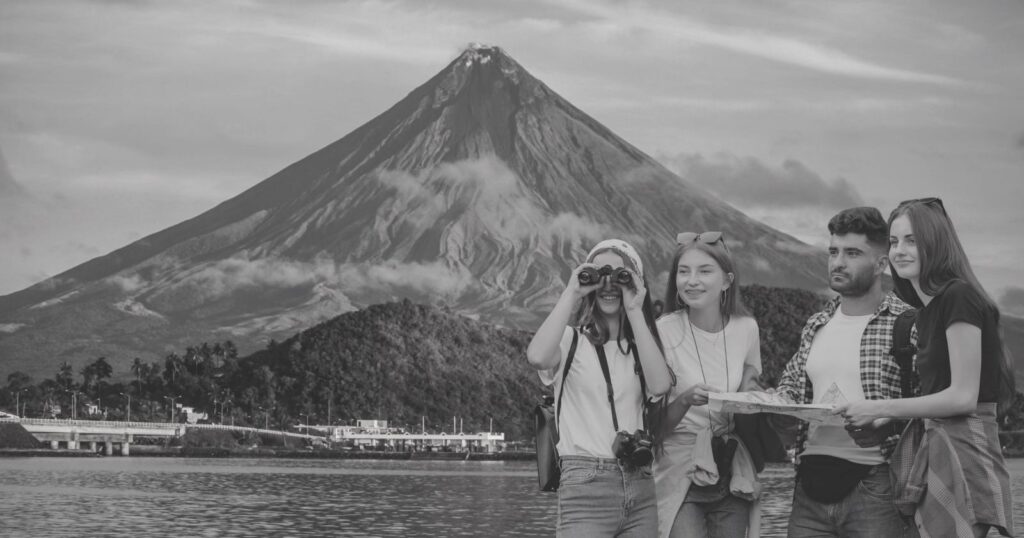
This 5-day peak season itinerary is ideal for:
- First-time Bicol visitors who want to experience the highlights of Daraga and Legazpi in one trip
- “Barkada” trips (groups of friends) looking for a mix of adventure, culture, and great food
- Couples and families who want a well-paced combination of outdoor activities and heritage exploration
- Travelers arriving through Bicol International Airport (BIA) in Daraga, you land right in the heart of your itinerary
QUICK ITINERARY SUMMARY
| Day | Theme | Highlights |
| Day 1 | Arrival in Daraga | BIA airport, lunch at Colonial Grill, afternoon coffee at 528 Ilawod Daraga, sunset views of Mayon at Legazpi Boulevard, dinner at Farmplate |
| Day 2 | Mayon and Daraga History | Breakfast at Graceland Daraga, National Museum–Bicol, a tri-heritage stop at Cagsawa Ruins and Budiao Ruins, ATV ride, Daraga food experience for lunch (JGR Busay), Daraga Church at sunset, dinner at Red Labuyo, extended night at Quento for local nightlife |
| Day 3 | Deeper Albay: Farms, Caves, and Green Hills | Photo stop at the viral 7-Eleven with the Mayon backdrop, Hoyop-Hoyopan Cave, Quitinday Green Hills, Quituinan Ranch and its Japanese tunnel, Sumlang Lake, extended night at the Marison Hotel’s Chilo bar |
| Day 4 | Legazpi City Exploration | Sunrise at Lignon Hill (with its own Japanese tunnel nearby), breakfast at Biggs Albay, early pasalubong shopping around Legazpi, lunch at Smalltalk Café, street food and local drinks at Tamaoyan, sunset views at Highlands Legazpi |
| Day 5 | Shopping, and Departure | Pasalubong shopping, food stops (Antonia’s, Café Fabrica, and more), BIA departure |
ESTIMATED BUDGET (5 DAYS, PER PERSON)
| Category | Budget Range |
| Accommodation (4 nights) | ₱3,200 – ₱8,000 |
| Food and drinks | ₱2,800 – ₱5,800 |
| Activities and entrance fees | ₱1,900 – ₱4,200 |
| Local transport | ₱1,200 – ₱2,500 |
| Pasalubong and shopping | ₱500 – ₱2,000 |
| TOTAL (estimated) | ₱9,600 – ₱22,500 |
Book accommodations, ATV rides, motorcycle rentals, and tickets through viajekita.com to compare options and secure your dates in advance, essential during peak season when Albay fills up fast.
GETTING TO DARAGA AND LEGAZPI
By Air (Recommended):
Fly into Bicol International Airport (BIA) located right in the heart of Daraga, Albay and land at your very first destination. Philippine Airlines and Cebu Pacific operate daily flights from Manila, with a flight time of approximately 45–60 minutes.
By Land:
From Manila, major bus lines including Cagsawa, Bicol Isarog, DLTB, and Raymond operate Bicol-bound coaches from Cubao and Pasay terminals. Travel time is approximately 9–12 hours. Night buses are a popular option so you can sleep through the journey and arrive in Daraga in the early morning.
Getting Around Daraga and Legazpi:
- Tricycles are the go-to for short-distance trips within each town
- Jeepneys connect Daraga and Legazpi City (approximately 20–30 minutes)
- Grab operates throughout Legazpi City and in parts of Daraga, offering a convenient option for travelers who prefer cashless, app-based transportation. Availability may vary depending on your location and time of day.
- Taxis are available around Legazpi City, particularly near the airport, malls, and major hotels, and are a comfortable choice for longer trips around nearby towns.
DAY 1
ARRIVAL DAY— FIRST IMPRESSIONS AND FIRST VIEWS
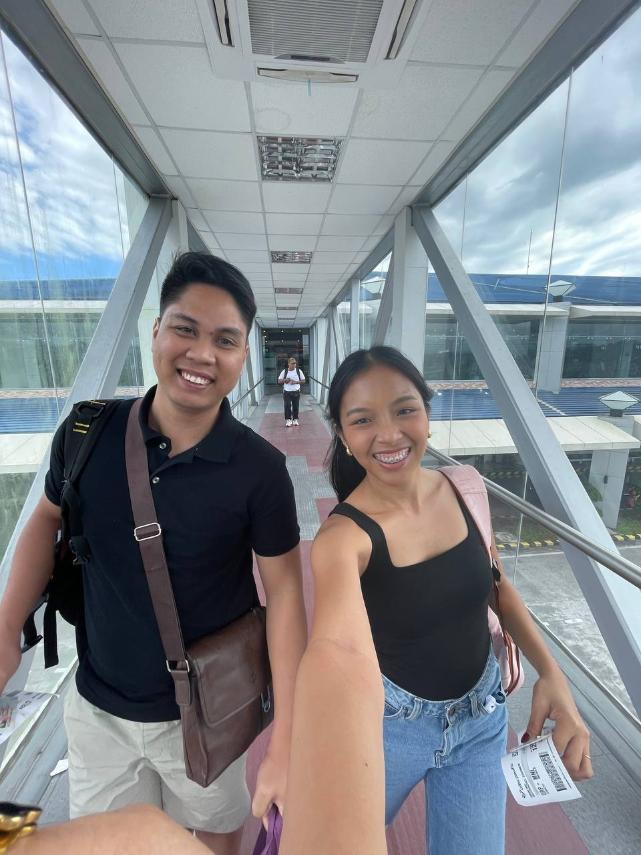
Morning: Arrival at Bicol International Airport
Cost: Airport transfer (tricycle to Daraga town center): ₱100- ₱500
You land in Daraga at Bicol International Airport, located in the center of the municipality. Your hotel is likely minutes from the airport. Check in, rest briefly, and hydrate. Mornings in Albay from March to May are warm and humid, so take it slow on your first day.
If you booked a motorcycle rental through Viaje, your driver or rental provider will meet you at the arrivals hall. If not, tricycles, taxis and grab are available just outside the airport.
Midday: Lunch at Colonial Grill
Cost: Verify current menu pricing at 1stcolonialgrill
Settle into your first Bicolano meal at Colonial Grill, a Daraga favorite for hearty grilled fare and local comfort food. It’s an easy, unhurried way to start the trip after a flight.
Afternoon: Coffee at 528 Ilawod
Cost: Approximately ₱150–₱300 per person
Spend the early afternoon at 528 Ilawod Daraga, a laid-back café in Barangay Ilawod known for its good coffee and relaxed atmosphere. This is a good stop to catch your breath, get online, and plan the days ahead.
Late Afternoon: Legazpi Boulevard
Cost: Free (public boulevard)
Head over to Legazpi Boulevard, the seaside promenade along Albay Gulf. This is the perfect place to unwind with a view of Mayon Volcano across the bay of Legazpi. This is one of the most beautiful, low-key ways to watch the horizon change colors over the volcano on your first evening. Buy some street food nearby, walk along the boulevard, and let the trip properly begin.
Evening: Dinner at Farmplate
Cost: Approximately ₱250–₱500 per person
Close out your arrival day with dinner at Farmplate, known for farm-to-table dishes that make good use of Bicol’s produce. It’s a fitting first-night meal before five days of heavier, richer Bicolano cooking ahead.
Accommodation: Check in to your Daraga accommodation. Browse and book options near Cagsawa Ruins, at viajekita.com/accomms

DAY 2
MAYON AND DARAGA HISTORY
Morning: Breakfast at Graceland Daraga, then the National Museum–Bicol
Cost: ₱150–₱300 per person | Museum is free (open Tuesday–Sunday, 9 AM–5 PM)
Start the day with breakfast at Graceland Daraga, a popular local fast food, and then head to the National Museum of the Philippines-Bicol in Barangay Busay, which is just a short walk from Cagsawa Ruins. The Bicolandia: Land of Volcanoes exhibit covers the region’s volcanic geology and natural history. The museum also has a small butterfly garden and a viewing deck with an unobstructed view of Mayon. Entrance is free, so it’s one of the best-value stops on this entire itinerary.
Late Morning: Cagsawa Ruins and Budiao Ruins
Cost: ₱100 (adults), ₱50 (children) | Budiao Ruins is free
Walk over to the Cagsawa Ruins, Albay’s most iconic landmark. The bell tower of the 16th-century church, left standing after Mayon Volcano’s catastrophic 1814 eruption, is the single most photographed site in the province. Mayon rises almost perfectly conical directly behind it. The park is open daily from 5:00 AM to 7:00 PM, and entrance is ₱100 for adults and ₱50 for children. You may book your Cagsawa ruins ticket in advance at viajekita.com/cagsawa
From Cagsawa, continue to the Budiao Ruins in Barangay Bañadero, the remains of another Franciscan-era church, buried in the same 1814 eruption that destroyed Cagsawa. Budiao was only excavated and opened to visitors in recent years, so it’s far less crowded, and gives useful context for how widespread that eruption’s destruction really was across Daraga.
Midday: ATV Ride
Cost: Verify current pricing at viajekita.com/atvrides
What to wear: Closed-toe shoes, long pants or leggings (protection against dust and debris). Put on some some sunscreen as well especially when you are riding in the middle of the day. The ATV operator provides helmets – be sure to wear them at all times.
This is the activity most visitors come to Daraga for. ATV operators near Cagsawa Ruins offer rides through the volcanic terrain surrounding Mayon’s foothills, ash-gray lava fields, shallow river crossings, and lookout points where the volcano fills your entire field of view.
Book your ATV ride in advance through viajekita.com/atvrides First-timers are briefed on safety before departure; no prior experience is required.
Afternoon: Lunch at Jimaynah’s Ground and Restaurant
Cost: ₱200–₱400 per person
Refuel with a Daraga food experience at JGR Busay, a local favorite for authentic Bicolano dishes. This is a good place to order Bicol Express and laing if you haven’t already, both are the region’s signature dishes, cooked on fresh chili and coconut milk.
Sunset: Daraga Church
Cost: Free (church grounds open to the public)
End the active part of your day at Daraga Church, formally Nuestra Señora de la Portería. Built in 1773, this Franciscan baroque church sits on a hilltop built from the same volcanic rock Mayon has produced for centuries, and the grounds offer one of the best unobstructed views of Mayon in all of Daraga. Time your visit for sunset.
Evening: Dinner at Red Labuyo
Cost: ₱250–₱500 per person
Have dinner at Red Labuyo, known for its spicy, chili-forward take on Bicolano classics, a fitting way to close out a day built around Daraga’s history and gastronomic offerings.
Extended Night: Quento
Cost: ₱150–₱400 per person
If you still have energy, cap the night at Quento for a taste of local Albay nightlife – drinks, good music, and a more low-key alternative to Legazpi City’s bar scene.
DAY 3
DEEPER ALBAY— FARMS, CAVES, AND GREEN HILLS
Morning: The Viral 7-Eleven Photo Stop
Cost: Free
Start the day with a quick, easy photo stop at the now-famous 7-Eleven convenience store in Camalig, with Mayon rising directly behind it. It is one of the more unexpected but genuinely popular photo spots to come out of Albay in recent years. It costs nothing and takes ten minutes for the photo shoot. It has become a rite of passage for visitors in Albay documenting their trip.
Late Morning: Hoyop-Hoyopan Cave
Cost: Entrance with guide, approximately ₱150 per person (small groups may be quoted a flat group rate ask on-site)
Head to Camalig for Hoyop-Hoyopan Cave, one of the most accessible cave systems in the Bicol Region. The name translates to “blow-blow” in the local dialect, referring to the cool air that flows through its chambers. A local guide leads you through dramatic stalactite and stalagmite formations, a guide is required, and is typically included in the entrance fee.
Midday: Quitinday Green Hills
Cost: Environmental/trail fee, approximately ₱20 per person
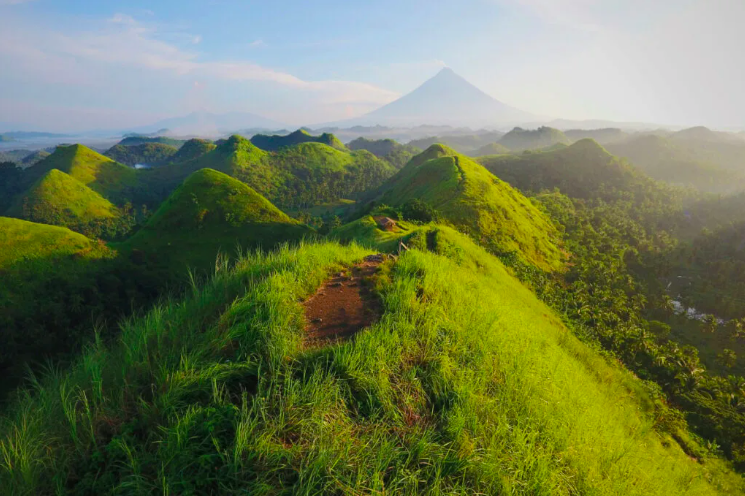
From the cave, continue to Quitinday Green Hills, a rolling landscape of abaca terraces forming a patchwork of green across volcanic hillsides, with Mayon rising above the horizon. It’s often nicknamed Albay’s answer to the Chocolate Hills. Bring your own water and snacks; facilities in the area are minimal.
Afternoon: Quituinan Ranch and Japanese Tunnel
Cost: ₱30 per person, plus a ₱20 municipal environmental fee | Japanese Tunnel ₱20 per person (guide fees may apply for groups)
Next, visit Quituinan Ranch in Barangay Tinago, Camalig, a picnic-friendly hilltop with wide Mayon views, camping grounds, and horseback riding. Right beside it is the Quituinan Japanese Tunnel, a restored WWII-era tunnel system dug by Japanese forces during the war, now open to the public with local guides. Around 700 Japanese soldiers died in the battle fought here, and the tunnel is one of the more sobering historical stops on this itinerary.
Late Afternoon: Sumlang Lake
Cost: Boat/raft ride, approximately ₱100–₱200 per person
End your Camalig loop at Sumlang Lake, a spring-fed lake best known for traditional bangka (outrigger boat) rides across still water with Mayon reflected behind them. Late afternoon light here is some of the most photogenic in the entire province.
Extended Night: Chilo Bar at Marison Hotel
Cost: ₱150–₱400 per person
Wrap up the day at the chilo bar at Marison Hotel, a relaxed spot to unwind after a full day of countryside exploration.
DAY 4
LEGAZPI CITY EXPLORATION
Photo credit: Here in Legazpi FB Page
Morning: Sunrise at Lignon Hill
Cost: Approximately ₱20 per person (free before 8 AM for joggers); zipline and other activities priced separately
Start early at Lignon Hill Nature Park on the outskirts of Legazpi City, one of the most spectacular panoramic viewpoints in Albay, Mayon Volcano on one side, Legazpi City and the coastline on the other. Entrance is minimal (around ₱20), and joggers can enter free before 8:00 AM. While you’re there, ask about the small Japanese tunnel near the park entrance, a separate, shorter WWII-era tunnel from the one at Quituinan, worth a quick look if you have time.
Breakfast: Biggs Albay
Cost: ₱200–₱400 per person
Head down for breakfast at Biggs Albay, a homegrown Legazpi restaurant brand with a loyal local following, a good introduction to the city’s own dining scene, distinct from Daraga’s.
Late Morning: Early Pasalubong Shopping
Cost: Variable, budget as preferred
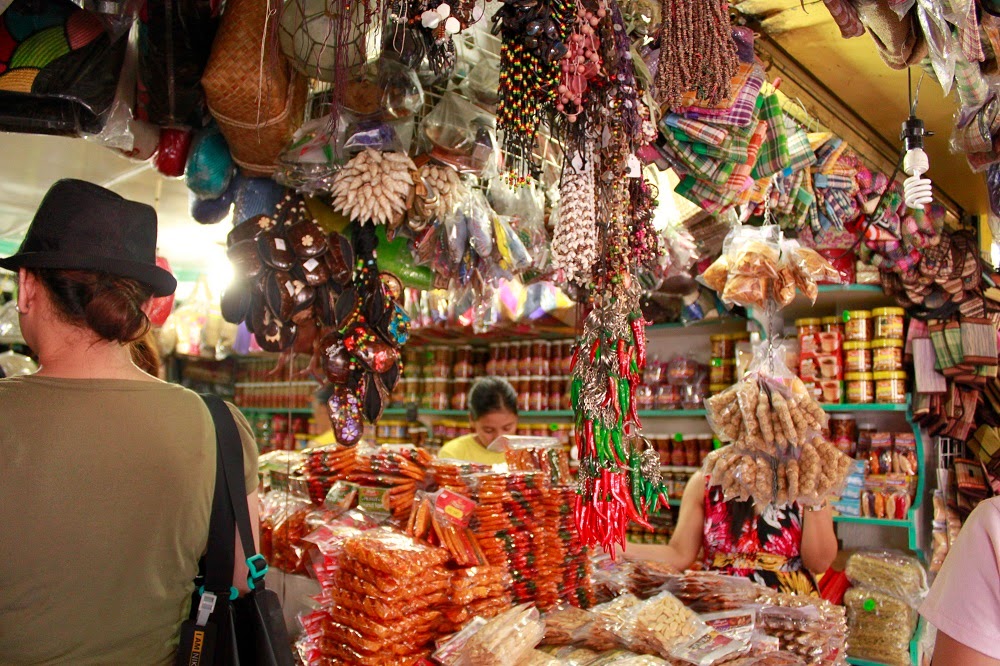
Get a head start on pasalubong shopping in and around Legazpi City before Day 5’s dedicated shopping run, this spreads out the load and gives you first pick at the public market and specialty shops for pili products, Bicol Express spice packs, and abaca weaves.
Lunch: Smalltalk Café
Cost: ₱200–₱400 per person
Have lunch at Smalltalk Café, a relaxed spot for a mid-day break in the middle of a shopping and sightseeing day.
Afternoon: Tamaoyan
Cost: ₱150–₱350 per person
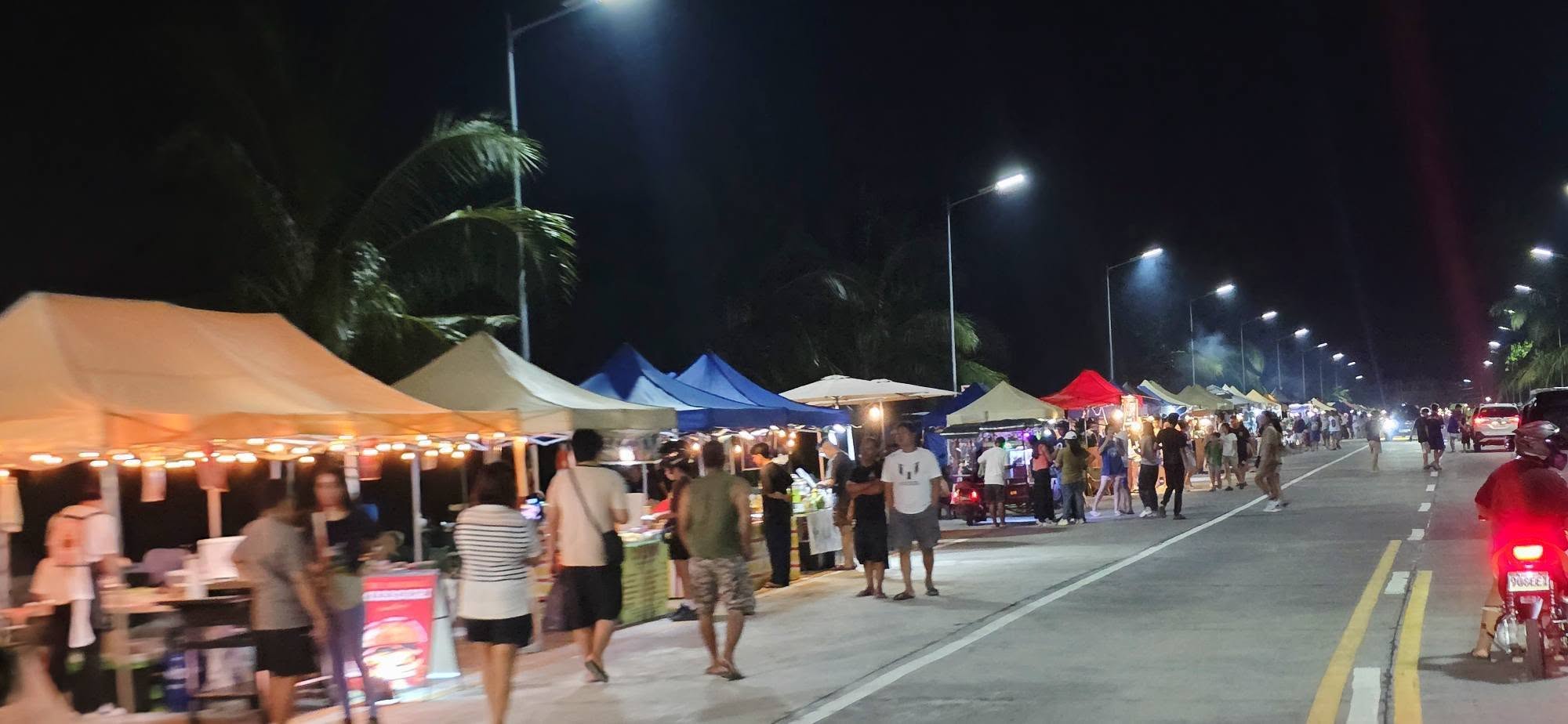
Spend the afternoon at Tamaoyan, where you can interact with locals over street food, local drinks, and coffee. This is one of the more grounded, less touristy stops on the itinerary, a good chance to slow down and talk to people rather than just photograph views.
Evening: Highlands Legazpi
Cost: ₱200–₱500 per person
Close the day at Highlands Legazpi, elevated above the city for what’s considered one of the best overall views of Legazpi. A fitting way to end your one full day dedicated to the city itself.
DAY 5
SHOPPING, AND DEPARTURE
Photo credit: The daily posh
Morning: Pasalubong Shopping and Food Stops
Cost: ₱500–₱2,000 (budget as preferred) | Food stops, ₱300–₱600 per person
Dedicate your last day to finishing your pasalubong (gifts and souvenirs to bring home). Albay’s most distinctive offerings:
Round out your shopping with food stops at Antonia’s and Café Fabrica, among other local favorites, good spots for a final Bicolano meal or a last round of pasalubong-worthy baked goods and snacks.
Evening: Departure from Bicol International Airport
Cost: Pasalubong: ₱500–₱2,000 (budget as preferred)
Your flight home departs from Bicol International Airport in Daraga, just minutes from the sites you’ve explored these past five days. Got a few hours to spare before check-in? Squeeze in one more local experience: try your hand at abaca bag weaving, a Bicol craft tradition at Ruyag. Book your ticket here: viajekita.com/experience
BUDGET SUMMARY TABLE
| Category | Budget Traveler | Mid-Range | Comfortable |
| Accommodation (4 nights) | ₱3,200 | ₱5,500 | ₱8,000 |
| Food (5 days, 3 meals + cafés/bars) | ₱2,800 | ₱4,000 | ₱5,800 |
| Activities + Entrance Fees | ₱1,900 | ₱2,900 | ₱4,200 |
| Local Transport (rental/fuel) | ₱1,200 | ₱1,800 | ₱2,500 |
| Pasalubong + Shopping | ₱500 | ₱1,000 | ₱2,000 |
| TOTAL (per person) | ₱9,600 | ₱15,200 | ₱22,500 |
Excludes airfare. Manila to Legazpi (BIA) round-trip typically ranges from ₱2,000–₱6,000 depending on airline and booking window.
PEAK SEASON TIPS (MARCH–MAY)
Book everything in advance. March through May is the busiest travel period for Albay. Accommodations near Cagsawa Ruins and in Legazpi City fill up quickly, especially during Holy Week (March–April) and Magayon Festival (May). Use Viaje to book accommodations, ATV rides, tickets, and motorcycle rentals before you arrive.
Rent a motorcycle for maximum flexibility. Having your own motorcycle transforms how you explore Albay, go where you want, when you want, at your own pace. Motorcycle rentals are especially popular with travelers: affordable, easy to navigate through traffic, and ideal for solo riders or couples. Book here at viajekita.com/scooters.
Start activities early. By 10:00 AM, the Albay heat during dry season is significant. Schedule outdoor activities before 10:00 AM or after 3:30 PM.
Hydrate consistently. Carry a water bottle. The combination of heat, outdoor activities, and spicy Bicolano food requires more hydration than most travelers expect.
Magayon Festival (May). If your trip overlaps with May, you may encounter street parades, cultural performances, food fairs, and heightened festivity across Albay Province.
Sunscreen is non-negotiable. Albay is coastal-proximate and sit at lower elevation than some Visayan destinations. UV exposure during peak season is intense.
Mayon Volcano views are not guaranteed. Even in dry season, cloud cover can obscure Mayon’s summit, particularly in the early afternoon. Your best viewing windows are early morning (5:00–8:00 AM) and late afternoon (4:30–6:00 PM).
HOW TO BOOK YOUR TRIP WITH VIAJE
Viaje is the first fully integrated tourism booking platform in the Bicol Region, based in Daraga, Albay. Through Viaje, you can book:
Cagsawa Passes: viajekita.com/cagsawa
ATV Rides: viajekita.com/atvrides
Accomodations: viajekita.com/accomms
Adventure: viajekita.com/adventure
Motorcycle Rentals: viajekita,com/scooter
No app download required. Visit viajekita.com from any browser, add it to your home screen for an app-like convenience, and pay securely via Dragonpay, where you can choose numerous payment options like GCash, Maya, InstaPay, BPI, and BDO.
FREQUENTLY ASKED QUESTIONS
Q: When is peak season in Daraga and Legazpi, Albay?
A: Peak season in Daraga and Legazpi runs from March through May, the dry season months when rainfall is minimal, skies are clear, and Mayon Volcano is most reliably visible. Holy Week (March–April) and Magayon Festival (May) are the two busiest periods within peak season.
Q: How much does a 5-day trip to Daraga and Legazpi cost?
A: A budget traveler can manage approximately ₱9,600–₱11,000 for 5 days (excluding airfare), while a mid-range traveler should budget around ₱15,000–₱17,000. This covers accommodation, food, activities, and local transport. Book via Viaje to compare accommodation and activity options.
Q: How much is the entrance fee for Cagsawa Ruins, and what are the opening hours?
A: Cagsawa Ruins is open daily from 5:00 AM to 7:00 PM. Entrance is ₱100 for adults and ₱50 for children.
Q: Do I need to book ATV rides in advance during peak season?
A: Yes, strongly recommended. Peak season, particularly during Holy Week and Magayon Festival in May, sees high demand for ATV rides near Cagsawa Ruins. Book in advance through viajekita.com/atvrides to secure your preferred date and time.
Q: Is it safe to visit Mayon Volcano?
A: Visitors do not go up or near Mayon Volcano’s active crater. All tourism activities, ATV rides, photography, Cagsawa Ruins visits, take place at safe distances in the volcano’s foothills and surrounding areas. The Philippine Institute of Volcanology and Seismology (PHIVOLCS) regularly monitors Mayon and issues advisories when activity warrants adjusted safety perimeters. Your ATV operators and Viaje will be aware of any current advisories.
Q: How do I get from Daraga to Legazpi City?
A: Daraga and Legazpi City are adjacent, approximately 20–30 minutes apart. You can take a jeepney for approximately ₱20–₱40, hire a tricycle for ₱80–₱150, use Grab in Legazpi City, or book a motorcycle rental through viajekita.com/scooter for the most convenient and flexible multi-stop day.
Q: What is Magayon Festival and when does it happen?
A: Magayon Festival is a month-long province-wide celebration in May that honors Mayon Volcano and the legendary Daragang Magayon (the Beautiful Maiden of Bicol, whose story is tied to Mayon’s origin). Events include street parades, cultural performances, trade fairs, and food festivals across Albay Province. It is the biggest annual event in Albay and coincides with the end of peak dry season.
Q: Should I rent a vehicle or motorcycle for this itinerary?
A: Yes, highly recommended, especially for Day 3 , which involve multiple stops across the Albay countryside. Renting a vehicle or motorcycle through viajekita.com/scooter gives you the flexibility to explore at your own pace. Motorcycle rental is an affordable and popular option for solo travelers and couples.
Q: Can I do this itinerary without a vehicle rental?
A: Yes for Days 1, 2, and 5, which stay mostly within or between Daraga and Legazpi City (accessible by jeepney, tricycle, and Grab). Day 3’s Camalig loop and parts of Day 4 benefit strongly from an arranged vehicle or motorcycle rental through viajekita.com/scooter, especially for travelers who value flexibility.
Q: What Filipino or Bicolano food should I not miss on this trip?
A: Do not leave Albay without trying: Bicol Express (spicy pork with coconut milk and chili), laing (taro leaves in coconut milk), pinangat (taro leaves and fish steamed in coconut milk), *sili* ice cream (chili-flavored ice cream, a uniquely Albay creation), and anything made with pili nuts, Bicol’s native nut used in sweets and snacks.